How Self-Driving AI Cars Work
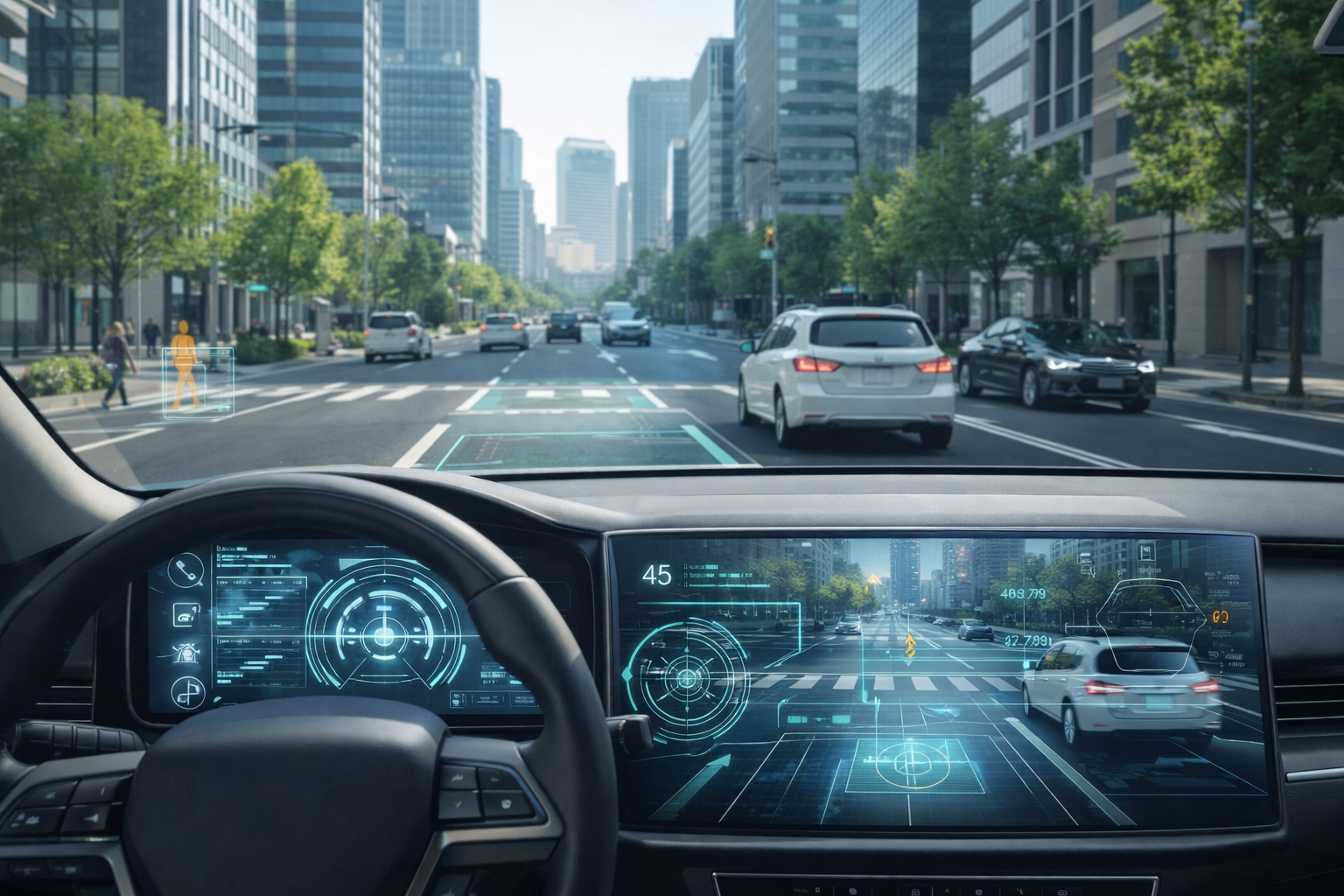
As artificial intelligence continues to advance, self-driving vehicles are becoming a realistic part of modern transportation rather than a distant concept. These vehicles rely on a combination of sensors, machine learning algorithms, and real-time data processing to navigate roads. Cameras, radar, and lidar systems continuously collect information about traffic, road conditions, pedestrians, and signage. AI algorithms analyze this data to recognize patterns and predict how the vehicle should respond in different situations.
Potential Safety Benefits
One of the strongest arguments for self-driving technology is its potential to improve road safety. Human error, including distraction, fatigue, and impaired driving, contributes to the majority of traffic accidents. AI systems do not experience these limitations and can react faster to sudden changes in the environment. Features such as automatic braking and collision avoidance already demonstrate how AI can assist drivers and reduce accident risk.
Current Limitations of Autonomous Vehicles
Despite their potential, self-driving cars still face significant technical challenges. Complex environments like construction zones, severe weather, and heavy urban traffic remain difficult for AI systems to navigate consistently. These scenarios often require nuanced judgment that humans perform instinctively but machines struggle to replicate. Because of these limitations, most current self-driving systems still require human supervision.
Public Trust and Accountability
Public confidence plays a critical role in the adoption of self-driving cars. High-profile accidents involving autonomous vehicles have raised concerns about safety and accountability. When an accident occurs, questions arise about whether responsibility lies with the driver, the manufacturer, or the AI system itself. Clear regulations and transparency are necessary to build trust and ensure the public understands how these systems operate.
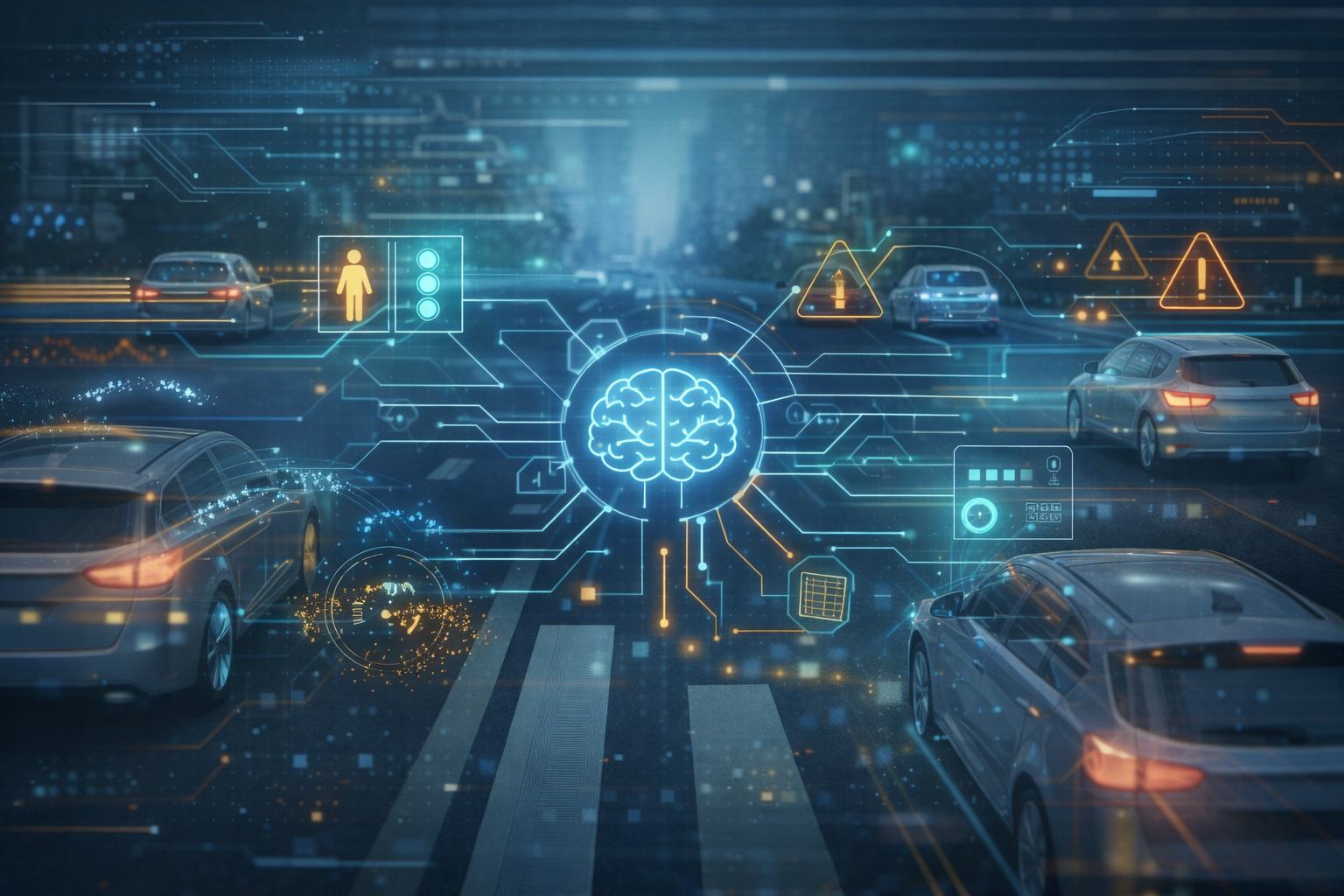
AI-generated image illustrating how autonomous vehicle systems process data and make driving decisions.
Ethical and Regulatory Considerations
Ethical concerns also influence the development of self-driving technology. Autonomous systems may encounter situations where no option is entirely safe, forcing the AI to make difficult decisions. Determining how these decisions should be programmed highlights the need for ethical guidelines and government oversight. Regulators are working to establish standards that protect public safety while allowing innovation to continue.
The Future of Self-Driving AI Cars
Although fully autonomous vehicles are not yet common, partial automation is already widespread. Features like adaptive cruise control and lane-keeping assistance represent gradual steps toward full autonomy. Over time, improvements in AI technology and clearer regulations are expected to expand the use of self-driving cars, particularly in controlled environments such as highways and commercial fleets.
← Return to Articles