The Growing Need for Driver Monitoring
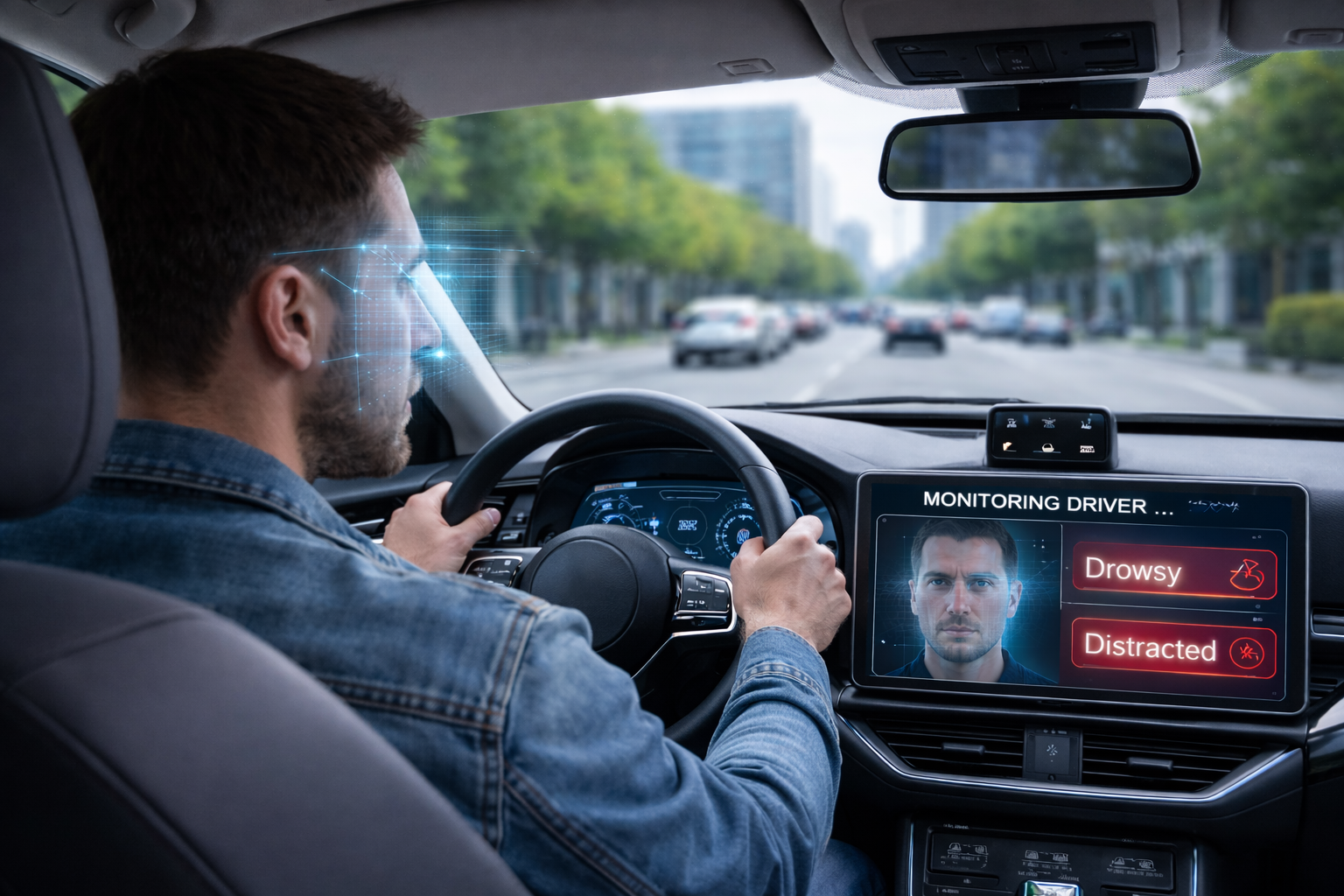
As driver-assistance systems become more advanced, ensuring that drivers remain attentive has become a major safety concern. While many vehicles now offer features such as lane keeping and adaptive cruise control, these systems still rely on human drivers to remain engaged and ready to intervene. To address this challenge, automakers are increasingly turning to artificial intelligence to monitor driver behavior in real time.
How Driver Monitoring Systems Work
AI-driven driver monitoring systems typically rely on in-cabin cameras, infrared sensors, and facial recognition technology. These systems track eye movement, head position, blinking patterns, and facial orientation to determine whether a driver is paying attention to the road. By analyzing these signals over time, AI models can detect signs of distraction, drowsiness, or inattention.
Unlike earlier systems that relied on steering wheel movement alone, modern AI monitoring systems can identify more subtle behaviors. For example, a driver looking down at a phone, repeatedly yawning, or failing to scan the road may trigger alerts designed to refocus the driver’s attention.
Why Driver Attention Matters in AI-Assisted Driving
Despite rapid advances in automation, most vehicles on the road today operate at Level 2 automation, meaning the driver is still responsible for the vehicle at all times. AI-based driver monitoring systems help bridge the gap between automation and human responsibility by ensuring that drivers remain alert when assistance systems are active.
Maintaining driver attention is especially important during complex or unexpected driving situations, such as construction zones, poor weather, or sudden obstacles. AI monitoring helps reduce overreliance on automation by reminding drivers that they are still an essential part of the driving process.
Limitations and Concerns
While driver monitoring technology offers clear safety benefits, it also raises concerns. Privacy is a major issue, as continuous in-cabin monitoring can make drivers uncomfortable. Additionally, false alerts or inconsistent implementation across manufacturers can reduce trust in these systems.
There is also ongoing debate about how much responsibility should be placed on drivers versus automated systems. If monitoring systems are too strict, they may frustrate drivers. If they are too lenient, they may fail to prevent dangerous behavior.
The Role of AI in Improving Road Safety
By detecting distraction and fatigue early, AI-based driver monitoring systems have the potential to significantly reduce accidents. When used responsibly, these technologies support safer driving habits while reinforcing the importance of human oversight in AI-assisted vehicles.
As automakers continue refining these systems, striking the right balance between safety, privacy, and usability will be critical to earning public trust and improving overall road safety.